You Don’t Buy Land. You Buy Every Problem Attached to It.
The land was cheap. The problems were not.
Over more than 30 years in real estate, I have participated in more than 50 land-acquisition processes across different markets and price ranges.
One of the most complex involved assembling 23 separately owned properties into a single development site.
That experience reinforced an important lesson: buying the land is only the beginning.
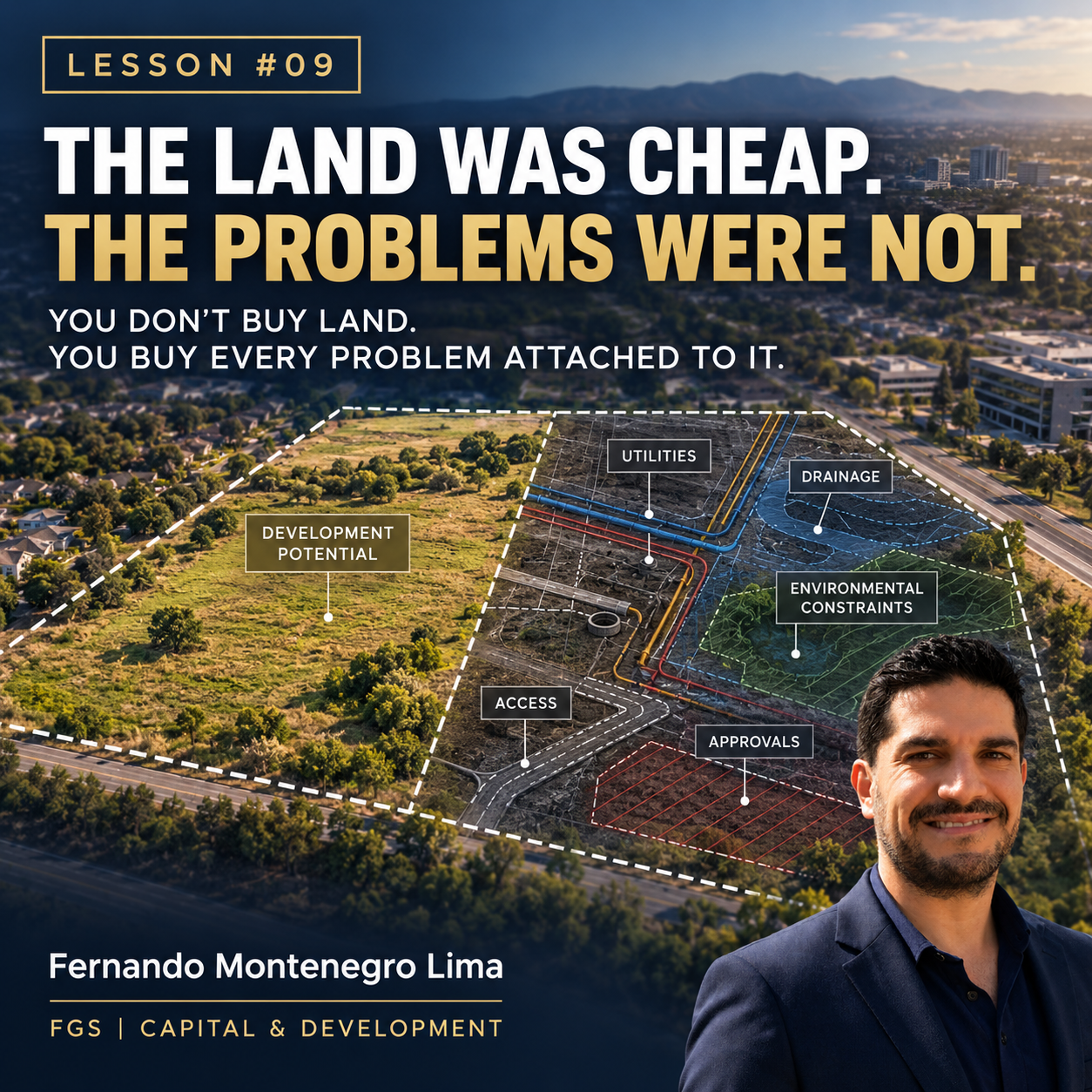
A parcel may look attractive until due diligence reveals the real cost of development:
- zoning and entitlement restrictions;
- access and traffic requirements;
- utilities and off-site infrastructure;
- drainage and environmental constraints;
- title problems and easements;
- impact fees and approval delays;
- a product the market may not absorb at the required price.
A low acquisition price cannot compensate for a site that is expensive—or impossible—to develop.
The correct question is not: “How much does the land cost?”
It is: “What will it cost to transform this land into a financeable, marketable and executable project?”
This is why disciplined developers investigate before they celebrate. They test the product, schedule, infrastructure, approvals, capital requirements and downside scenarios before committing significant capital.
The profit of a development is often protected—or compromised—before construction begins.
Good land creates possibilities. Good due diligence determines whether those possibilities can become a business.
Evaluate the Land Before Committing the Capital.
If you need an independent review of feasibility, risks, infrastructure requirements or capital strategy, let’s talk.
Discuss a Site